Week 8: Sustainability and Textiles
 |
| Link |
Sustainability and Textiles
Webquest worksheet
that would act as a tool for students to identify the 'challenges and environmental costs' of the textiles industry - this could take on the form of a webquest, case study analysis with comprehension questions or research activity.
Sustainability
"Environmental sustainability is the ability to maintain the qualities that are valued in the physical environment. Most people want to sustain (or maintain)" (Peters and Castle, 2012)
Traceability
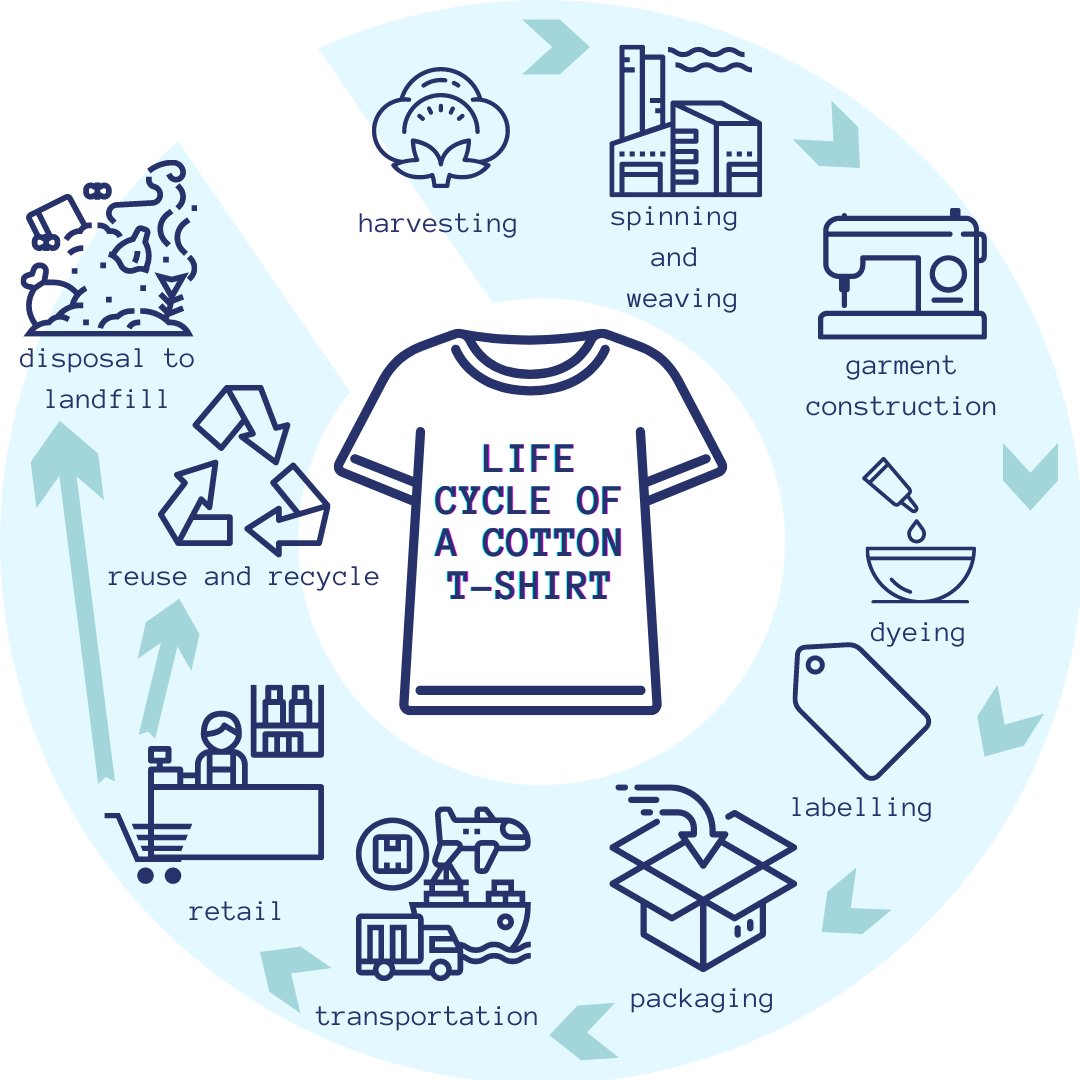
The ability to track something as it moves through a process from the raw natural material to the final finished saleable man made product. These two infographs below detail the life cycle of textiles.

Introducing Students to Ethical Consumerism
Students can be informed consumers already. Gathering the classroom's combined knowledge and running with these topics will increase their understanding through student lead learning.
Alternatively, students can research and present their favourite clothing label findings as they discover the company's textile lifecycle from seed to shop. Ask students to reflect on their findings. Students who are more informed about the hidden steps behind the manufacturing of textiles may begin to think about the long-term effects of fast fashion.
For an authentic learning experience from a teaching perspective, I would present students with companies that have found solutions to assist with textile landfill issues.
Reflecting on Sustainable Fashion
Taking Shape - Our sustainable journey. linkKowTow - We are responsible for what we produce. linkLorna Jane - Responsible sourcing. linkSheridan - Making tomorrow beautiful. linkR.M.Williams - Sourcing the good earth. link
Review Questions from page 366
1. Explain the importance of environmental impact in design choices for the 21st Century
2. What is Green Advantage?
3. Define the term DfE.
DfE stands for "design for environment" or "ecodesign".
At all stages of a product's development and life, often referred to as "cradle to grave" producers try and minimise environmental impacts and increase the efficiency of their resources.
The aim of all resources should not be cradle to grave, where products are thrown away. Alternatively, resources should be cradle to cradle instead so that all resources and products are reused, recycled or reinvented.
DfE is designed to encourage producers to change their current ways of policies, procedures and resource processes to minimise the impact on the environment. This can be the use of chemicals, dyes, using water, packaging and reducing wastage or landfill.

4. Explain three ways textile products could be recycled.
Donated to Op Shops for other people to buy
Repurpose a garment into another garment (jeans to bag)
Shred the garment and create new threads and create a new garment from scratch
AT2: Creative Folio - Reuse, Revamp & Recycle - use the following statements as stimulus for a page about the sustainability considerations for your designed textile solution
- Identify the source of fibres as natural or synthetic.
- Explain the term sustainability in relation to textiles.
- Summarise the main environmental and social problems related to the textile industry for your project.
- Contrast renewable and non-renewable textile sources.
- Identify the characteristics of sustainable clothing products.
- Compare traditional clothing production methods with modern industrialised methods.
- Describe the process of upcycling and give examples of how upcycling can be achieved in the textile and clothing industry.
- Create - Pinterest board - with a minimum of 12 pins that identify sustainable issues within the clothing/textiles industry.


Comments
Post a Comment